
Who Is Behind These Reviews
This site has one person behind it, not a team or a content farm. I write, test, and fact-check every guide myself, which means there is nowhere to hide a shortcut. Here is exactly how that testing works.
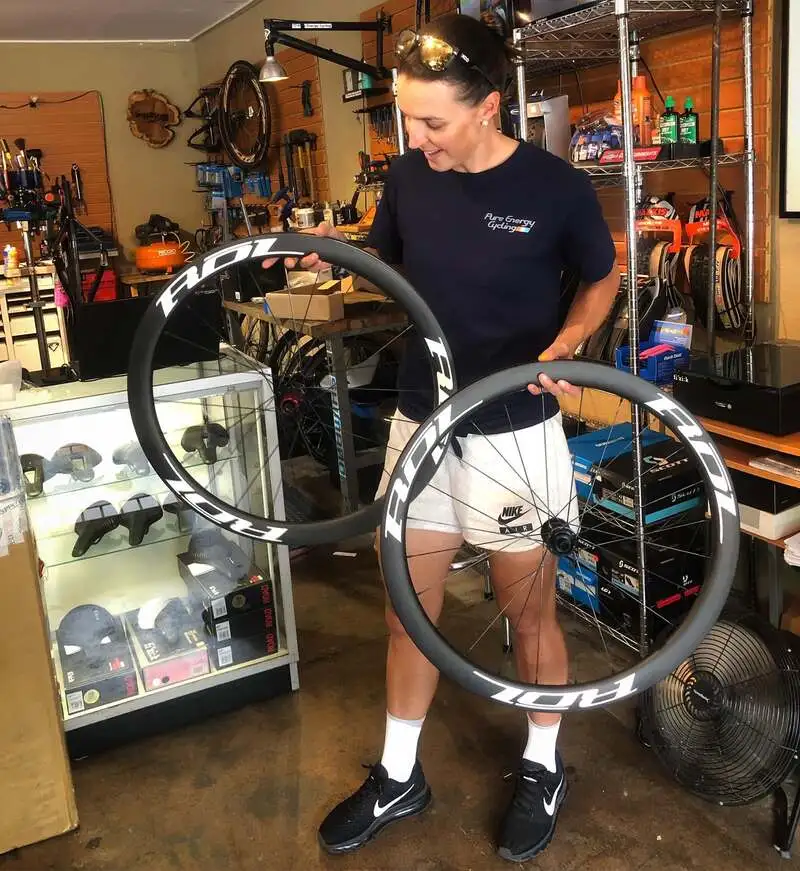
Rebecca Wiasak is a Seattle-based bikepacking rider and outdoor gear reviewer. After years of loaded touring across the Pacific Northwest and beyond, she started this site to publish honest, field-tested reviews of the bags, tents, and gear she actually rides with. Every review on this site is written, field tested, and fact checked by Rebecca herself before it publishes.
What I Judge Gear On
Every product gets judged on the same six things before it earns a score. These are the questions I would ask about gear going into my own pack, whatever the category.
Real weight, not claimed weight
The number that matters is what it weighs on my own scale, not the figure on the listing. I record actual packed weight before comparing.
Materials and construction
Two bags with the same capacity hold up differently. Denier of the fabric, seam construction, zipper quality, and similar distinctions change what survives a season of rough roads.
Verified ratings
Whether a waterproof, load, or temperature rating actually holds up in the field. IPX, hydrostatic head, and ISO ratings all mean something specific, and I say which one applies rather than writing "waterproof".
Manufacturer track record
Warranty support, recall history, and whether the brand publishes real specs and materials rather than only on request.
Durability under load
Whether the gear held its stated capacity and construction after real mileage, and how many nights or kilometers I put on it before writing the review.
Cost per year of use
Sticker price tells you little. I calculate cost per year of expected use and cost per night on the road, which reorders most categories.
Sources I Rely On
Those six questions only mean something if the numbers behind them are real. This is where they come from.
Manufacturer spec sheets
The primary source for every number I publish, captured from the current listing rather than an archived image.
My own field tests
Weight, waterproofing, and durability figures I measured myself on real routes, flagged wherever I could not reproduce a rating.
Independent gear test data
Industry test standards such as IPX and hydrostatic head ratings, and independent lab or reviewer data where it exists.
Live retail listings
Price, unit count, and bundle contents recorded at time of writing and re-checked on every update.
The Six-Stage Process
Turning those criteria and sources into a published guide happens in the same six steps every time. It is deliberately mechanical, so two runs through the same category land on a similar shortlist, because preference enters as late as possible.
Sweep the category
I list every product currently available in the category, not only the well-marketed ones, and record price, weight, and stated specs from the live listing.
Weigh and measure it myself
Specs come from my own scale and tape measure, never from the listing. Anything without a verifiable weight or published materials breakdown is cut at this stage.
Normalize the numbers
Everything converts to weight, packed size, and cost per year of use. This is the step that stops a flattering marketing photo from making weak gear look strong.
Verify manufacturer ratings
Waterproof, load, and temperature ratings are checked against field conditions where I can reproduce them. Where a rating is claimed but not evidenced, I record that as unverified rather than as tested.
Score and rank
The RW Score applies the same five weights across every product in the category. Ties break on cost per year of use, never on brand recognition.
Re-check before it publishes
Before anything goes live, I run back through it against a fixed checklist, not just a re-read.
Step six is a check on the four things most likely to cause real harm on the road if I get them wrong, run again on every scheduled update, not just before the first publish.
What Goes Into an RW Score
Once a product clears that process, it gets an RW Score: an editorial rating out of 10 built from five weighted inputs. It compares products against each other inside one category, and it is not a guarantee. A 9.8 does not mean a product will suit your specific trip.
How the gear held up over real mileage and nights outdoors, and whether it survived rain, dust, and rough roads without failing.
Fabric denier, seam and zipper quality, and what build evidence exists for it rather than for the product line in general.
Independent or field-reproduced testing for waterproofing, load capacity, and weight, weighted toward brands that publish real numbers.
Price divided by expected years of use at real mileage, which regularly reorders a category once marketing weight stops hiding it.
Full materials and weight disclosure, no vague "ultralight" claims masking real numbers, clear sizing and capacity information.
My strongest picks in the category.
Very close to the best, with minor trade-offs.
A solid performer with a clearly named trade-off.
Still effective, but a real limitation kept it out of the top tier.
Products that fall short of 8.0 do not make it into a published guide.
How I Decide Best Overall, Best Value and Best For
A ranked list is only useful if the labels mean something. Most roundups hand out "Best Value" to whatever is cheapest on the page. Mine are defined rules, applied after scoring, and only one product can hold each.
A product can win a label without topping the list, and the highest RW Score is not automatically Best Overall. If the top scorer costs four times the runner-up for a marginal gain in durability, the label goes to the runner-up and I say why.
Independence & How I Make Money
Affiliate disclosureEvery score and label above is worthless if it can be bought, so here is exactly how this site makes money. Rebecca Wiasak is funded by affiliate commissions. When you buy through a link here I may earn a commission from the retailer, at no extra cost to you. That is the whole business model, and it comes with rules I hold myself to.
- No brand pays for inclusion, a position, an RW Score, or the removal of a criticism. There is no rate card because nothing is for sale.
- I buy no sponsored reviews and accept no free product in exchange for coverage.
- Commission rates are not a scoring input. Where two products score equally, the tie breaks on cost per year of use, not on payout.
- No manufacturer sees a guide, a score, or a ranking before it publishes.
Several products I rate highly have no affiliate program at all. They stay in the guides, unlinked.
Where My Method Stops
Stated limitationsA comparison built from field tests can only tell you what I personally experienced. These are the gaps, and I would rather name them than let a confident tone imply I filled them.
- −I do not run a materials lab myself, so I cannot confirm a fabric's exact denier or hydrostatic head unless a manufacturer or independent program has tested it.
- −A durable, well-rated product can still be a poor fit for your bike, frame size, or trip length.
- −Test conditions vary. A bag I rode through a dry summer may face different stresses in a wet winter, and I say so in the guide where relevant.
- −Specs change without a name change, which is part of why every guide carries an update date rather than only a publish date.
- −An RW Score compares products inside one category at one point in time. It is not a prediction about how gear performs on your specific route or in your specific climate.
Nothing on this site is route guidance or a safety assessment, and my comparisons are not a substitute for your own judgment and local conditions.
Bikepacking and backcountry travel carry real risk, and safe practice differs by route, season, and rider experience. Check conditions, carry appropriate safety and navigation gear, and get advice from a local guide or ranger station before a new route, especially somewhere remote or in extreme weather. A high RW Score is a judgement about a product, never a recommendation for a route.
How I Keep Reviews Current
None of this stays fixed for long, so every guide carries a published date and a last-updated date, and substantial changes are noted at the top of the article rather than made quietly.
Method FAQs
Do you test the gear in a laboratory?+
No. I field test on real rides and camp-outs, and compare against manufacturer spec sheets and independent gear test data where it exists. Where a rating requires a lab to confirm, I cite whose test it was rather than implying it was mine.
Can a brand pay to be included or ranked higher?+
No. I do not accept sponsored reviews, paid inclusion, or free product in exchange for coverage, and no brand sees a guide before publication. Affiliate commissions are paid by the retailer and do not vary by product.
Why do most published scores sit in the Good-to-Excellent range?+
Products that fail spec transparency or durability checks do not reach scoring at all, and anything under 8.0 does not make it into a published guide. What survives that filter tends to cluster in the higher bands, but a Fair-tier product can still appear when it works well despite one clearly named trade-off, such as a higher cost per year or a heavier packed weight.
What exactly happens in that final check before a guide publishes?+
It is a fixed pass over four things: whether the stated weight matches my own scale, whether any load claim is near the manufacturer's limit, whether a safety-critical part looks reliable, and whether a climate caution is worth flagging. It runs again on every scheduled update, not only before the first publish.